


Artificial turf for small balconies: which model to choose and how to install it
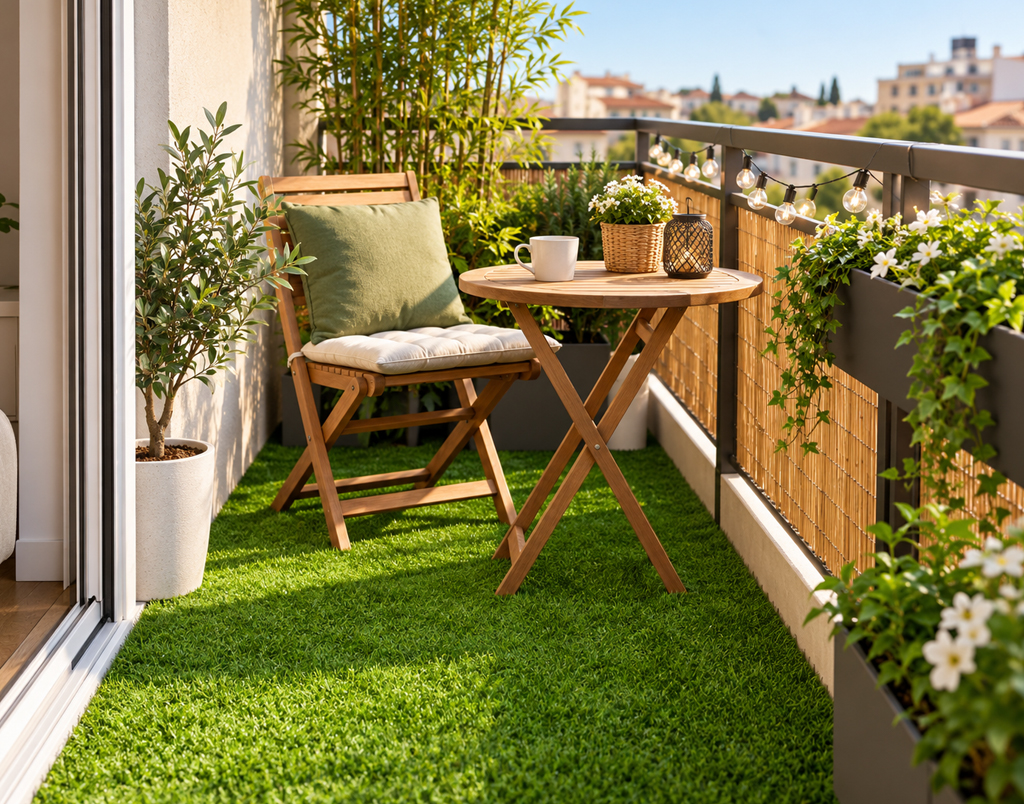
A small balcony deserves a touch of green too.
You don’t need a huge terrace to enjoy a pleasant corner at home. Sometimes it’s enough to cover that cold, old, or simply dull floor with artificial turf and add a couple of well-chosen details. No need to build a miniature jungle. With a few well-thought-out changes, a small balcony can be completely transformed.
Artificial turf for small balconies works really well because it’s installed without any building work, it’s easy to clean, and it gives the impression of a well-kept space from the very first glance. That said, it’s worth choosing the right model carefully, because in a small area, every detail stands out much more.
Which artificial turf to choose for a small balcony
For a balcony, we usually recommend an artificial turf that’s pleasant to the touch, comfortable to walk on barefoot, and easy to maintain. You don’t always need to pick the tallest or densest model. In smaller spaces, a medium pile height tends to look more natural, is easier to trim, and doesn’t overwhelm the space visually.
Think first about how you’re going to use that balcony. A corner for Sunday breakfasts is not the same as an area where your dog goes out every day, where children play, or where you move pots around depending on the sun. The use comes first.
If you’re going to walk on it a lot, look for a model with good fiber recovery. If you mainly want it for decoration, prioritize natural appearance and feel. You can browse our artificial turf models and compare pile heights, finishes, and uses before deciding.
Before installing it, check the floor carefully
Most balconies have floors made of tile, stoneware, concrete, or similar materials. These surfaces usually work well as a base for installing artificial turf, as long as they’re clean, dry, and firm.
If there are loose tiles, significant cracks, or areas that shift when you step on them, it’s best to fix these first. Artificial turf greatly improves the look of a balcony, but it needs a firm base for the result to be comfortable and long-lasting.
You also need to check the drainage. This may seem like a minor detail until it rains and the water decides to move in with you.
Don’t block the water outlet or the balcony’s natural slope. Let the drainage keep doing its job. If the floor drained well before installing the turf, it should continue to do so afterward.
If your balcony is more like a small terrace, you may find it useful to read more in our article on artificial turf for terraces.
How to measure and install artificial turf on a balcony
Measure the width and length at several points. Walls look straight until you bring out the tape measure. This is especially noticeable in older balconies: one side measures one thing, the other is half a centimeter more, and the corner has a personality all its own.
Lay the turf out before cutting it. Pay attention to the direction of the fibers and position it so it faces the point from which it will be seen most, usually from inside the home looking out. That small detail improves the finish without costing you an extra cent.
Then, trim it little by little around corners, railings, fixed legs, or drains. Use a sharp utility knife and a metal ruler if you need straight cuts. It’s better to adjust in two passes than to make one bold cut and regret it forever.
For small balconies, many installations are completed with spot fixing or suitable adhesive tape, without covering the entire surface with adhesive. The important thing when installing it is that the turf stays stable and that water can drain away. If you want to prepare the materials properly, check out what you need to install artificial turf beforehand.
Small details that make a difference
Once you’re done, brush the turf to lift the fibers. It may seem like a minor step, but it makes a real difference. The turf looks more natural and less like it just came fresh off the roll.
Afterward, you can add a tall planter, a narrow plant box, a lightweight chair, or an outdoor garland. On small balconies, less is more. If you fill the space with too many things, you won’t gain a pleasant corner—you’ll end up with a storage room with decorative pretensions.
It’s also worth finishing the edges neatly along the wall and keeping the cut around the drain clean. These are details you won’t notice in a quick photo, but you will every time you step outside barefoot.
If you’re going to install it yourself, start by choosing the right artificial turf. At jardinartificial.es you’ll find models and simple ideas to make your balcony look beautiful, practical, and ready for everyday use.
Also get your installation accessories ready: a utility knife, tape, adhesive if needed, and a brush. With a quiet afternoon and a bit of patience, you’ll see how that balcony you barely used starts to play a whole new role in your home.
