How to remove static electricity from artificial turf
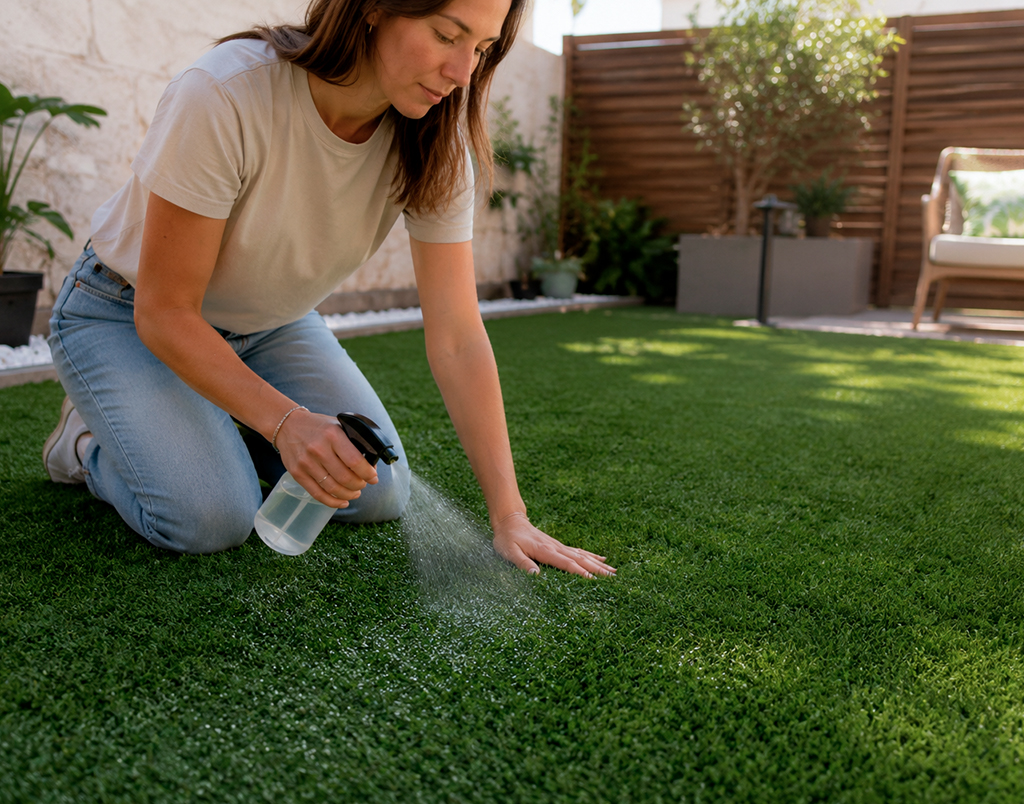
If you have ever noticed a small electric shock when stepping on your artificial turf, there is no need to worry. Static electricity in artificial turf is not dangerous or damaging to the turf; it is more common than it seems. Furthermore, it is easy to resolve.
In this article, we explain why it occurs, when it is most common, and, above all, how to easily eliminate it from your installation.
Estimated reading time: 3 minutes
Table of contents
Why does static electricity generate in artificial turf?
Artificial turf is made with synthetic fibers. When these fibers rub against each other or against footwear, especially in dry environments, a certain electrical charge can be produced, which is released upon contact. It is similar to what happens when touching a doorknob after walking on a carpet.
This static charge usually appears in:
- Very sunny terraces or attics.
- Areas with low ambient humidity.
- Newly installed turf.
- Frequent use with insulating footwear or when walking barefoot.
Important: This is not a turf defect or an installation error. It is a specific physical phenomenon that is easy to control and, most of the time, can be resolved with very simple actions.
Solutions to eliminate static electricity from artificial turf
There is no need to make major changes or invest a lot of time. With a few basic care steps, you can easily reduce or eliminate static electricity:
1. Provide some humidity
The simplest solution is also the most effective: lightly water the turf or spray a little water on it. This simple action helps dissipate the static charge almost instantly.
- It is an ideal solution in dry climates or during the summer months.
- There is no need to soak it; just moisten the surface.
2. Brush the turf regularly
Brushing prevents the fibers from matting and releases accumulated tension. Additionally, it keeps the turf more upright and natural. To do this:
- Use a hard-bristle brush.
- Brush against the direction of foot traffic for best results.
3. Does your turf have silica sand?
Silica sand helps reduce static by keeping the base moist and stable, but it is not essential. Keep in mind that:
- If your turf has sand, make sure it is well distributed.
- If it does not have sand, you can apply other equally effective solutions that we are telling you about.
4. Use a specific anti-static cleaner
A quick, convenient, and effective option is to apply an anti-static product for artificial turf. At Jardinartificial.es, we recommend the Clean Static sanitizing cleaner:
- It is diluted in water and applied with a spray or watering can.
- It eliminates static and also cleans, disinfects, and refreshes the fibers.
- Ideal for terraces, play areas, or daily-use gardens.
What we do not recommend you do
Avoid home remedies like fabric softeners or detergents. Although they may seem like a quick solution:
- They can damage the fibers over time.
- They attract dust and dirt.
- They leave residues that are difficult to remove.
And changing all the turf for a bit of static would be, as the saying goes, “killing a fly with a sledgehammer”
It is easy to prevent and easier to solve
Do not let a small shock prevent you from enjoying your garden.
From our experience, we know that static electricity in artificial turf is more frequent at the beginning, but with time and a little maintenance, it tends to disappear on its own.
As we have already told you, if you want to forget about the issue:
- Water lightly.
- Brush regularly.
- Use an anti-static product like Clean Static.
Your artificial turf is designed for hassle-free enjoyment, and a small shock should not change that.
Do you want more tips to keep your garden perfect all year round? Visit our blog and discover everything you need to know about the installation and care of quality artificial turf.